建模语言核心(Modeling Language Core)
核心建模语言(Core Modeling Language)是所有其他建模语言的基础。
Base 类作为所有 Gaphor 领域类的根类。Diagram 和 Presentation 则构成了图表中所有可见内容的基础。
Gaphor中的所有数据模型均从其实际的模型文件生成,这一机制使我们能够为您提供Gaphor内部模型的清晰图表展示。
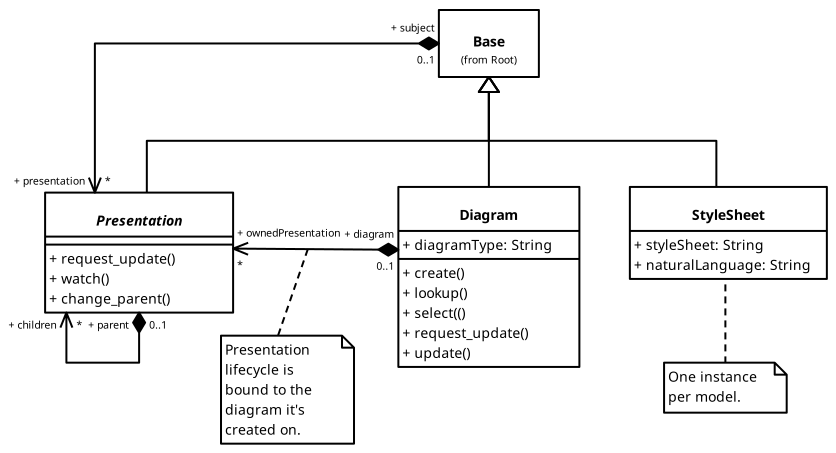
核心模型(含呈现类)
Base 基类
Base 类提供事件通知功能并与模型仓库(内部称为 ElementFactory)集成。模型中所有类都应继承自该基类。若模型中未显式指定元素的基类,则默认继承自 Base。此外,该模型还支持双向关系及派生关系。
RepositoryProtocol 和 EventWatcherProtocol 协议对于将模型连接到仓库及事件处理机制至关重要。
Base 类是 Gaphor 数据模型的核心。
- class gaphor.core.modeling.Base(id: str | None = None, model: RepositoryProtocol | None = None)[源代码]
所有模型数据类的基类。
- property model: RepositoryProtocol
所属模型(未设置时会抛出
TypeError异常)。
- unlink() None[源代码]
解链元素。
所有元素引用均被销毁。对于组合关联(composite associations),其关联元素也将被解链。
执行解链操作时将获取解链锁,以避免对此元素属性解链时出现递归问题。
事件处理(Event Handling)
- handle(event: object) None[源代码]
传播传入事件(Propagate Incoming Events)。
只有当元素是由
ElementFactory创建时,这才有效
- watcher(default_handler: Callable[[ElementUpdated], None] | None = None) EventWatcherProtocol[源代码]
为该元素创建一个新的观察者。
当与
self相关的属性发生更改时,监视器(Watchers)提供了一种便捷的方式来接收通知。要使用监视器(Watcher),该元素必须由正确配置的
ElementFactory`创建。此示例仅作说明用途:
>>> element = Base()
>>> watcher = element.watcher(default_handler=print)
>>> watcher.watch("note")  # Watch for changed on element.note
加载与保存
OCL 风格方法
Presentation 呈现类
- class gaphor.core.modeling.Presentation(diagram: Diagram, id: Id | None = None)[源代码]
一种特殊的
Base派生类型,可在Diagram上显示。Presentation 实例仅可由图表(Diagram)持有。
Presentation的子类型应实现gaphas.item.Item协议。- watch(path: str, handler: Callable[[ElementUpdated], None] | None = None) Self[源代码]
监控以
self为起点的特定元素路径。该处理器(Handler)为可选配置,默认使用简单的
request_update方法。监视器(Watchers)应在构造函数中设置,以便一次性完成注册和注销操作。
self.watch("subject.name")
该接口采用流式设计:返回 self 以实现链式调用。
- change_parent(new_parent: Presentation | None) None[源代码]
更改父级对象并更新该项目的矩阵变换,使其在视觉上保持原位。
Diagram 类
- class gaphor.core.modeling.Diagram(id: str | None = None, model: RepositoryProtocol | None = None)[源代码]
图表(Diagram)可以包含
Presentation呈现元素。若需为图表(Diagram)设置所有权关系,建模语言(如UML)应继承`` Diagram`` 类,并添加所有权关联规则。
- create(type_: type[P], parent: Presentation | None = None, subject: Base | None = None) P[源代码]
在图表上创建新的图表项。
该元素创建时将分配唯一ID,并挂载至图表根项(root item)。参数type指定要创建的元素类,新元素还可选包含父级关联(parent)和主题对象(subject)。
- lookup(id: str) Presentation | None[源代码]
按ID查找呈现项。
返回此图表中的呈现项,若未找到则返回
None。
- select(expression: Callable[[Presentation], bool]) Iterator[Presentation][源代码]
- select(expression: type[P]) Iterator[P]
- select(expression: None) Iterator[Presentation]
返回匹配表达式的所有画布项(canvas items)的迭代器。
- request_update(item: Item) None[源代码]
将项目标记为待更新状态。
此处不会立即执行更新,仅将项目添加至待更新集合中。
This method is part of the
gaphas.model.Modelprotocol.
- update(dirty_items: Collection[Presentation] = ()) None[源代码]
Update the diagram.
All items that requested an update via
request_update()are now updates. If an item has anupdate(context: UpdateContext)method, it's invoked. Constraints are solved.
Protocols
- class gaphor.core.modeling.base.RepositoryProtocol(*args, **kwargs)[源代码]
-
- select(self, expression: Callable[[Base], bool]) Iterator[Base]
Select elements from the repository that fulfill
expression.
- select(self, type_: type[T]) Iterator[T]
Select all elements from the repository of type
type_.
- class gaphor.core.modeling.base.EventWatcherProtocol(*args, **kwargs)[源代码]